
Green Hydrogen in Steel and Cement Industries: A Process Engineering Perspective
Decarbonizing the Giants: The Role of Green Hydrogen
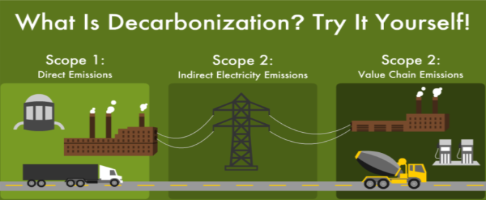
In an era where the imperative to decarbonize energy-intensive sectors has transcended rhetoric to become regulatory, technological, and economic mandates, the integration of green hydrogen into the steel and cement industries represents not merely a shift in energy vectors but a systemic transformation in process thermodynamics, reaction stoichiometry, and integrated plant design. These sectors, accounting for approximately 15% of global CO₂ emissions, are historically reliant on fossil-derived heat and reducing agents—particularly coking coal and natural gas—making them archetypal “hard-to-abate” domains.
Yet, as nations chart trajectories toward net-zero economies and carbon border adjustment mechanisms emerge, green hydrogen—generated via electrolysis powered by renewables—has surfaced as a versatile and potent enabler of low-carbon industrial pathways.
Process Simulation as a Strategic Lever
From a process engineering vantage point, the retrofitting or greenfield implementation of hydrogen-integrated routes necessitates exhaustive simulation, conceptual design, and dynamic operability assessments. Leveraging tools such as Aspen Plus®, Aspen HYSYS®, and gPROMS, engineers must resolve questions that span from energy integration and pinch point optimization to equipment reconfiguration and control logic redesign.
In Steelmaking:
The conventional Blast Furnace–Basic Oxygen Furnace (BF–BOF) route, wherein coke serves both as a fuel and a reducing agent, may be re-engineered through Direct Reduced Iron (DRI) processes using H₂ as a reductant. The endothermic nature of iron oxide reduction via hydrogen, unlike the exothermic carbon-based route, necessitates:
- Re-specification of shaft furnaces for controlled thermal environments.
- Thermodynamic modeling of Fe₂O₃ + 3H₂ → 2Fe + 3H₂O, including kinetics under variable temperature-pressure regimes.
- Mass and energy balance simulations to determine the impact on syngas handling, flue gas purification, and water recovery.
In Cement Manufacturing:
The decarbonization challenge lies in both thermal fuel substitution and process emissions from limestone calcination. Here, green hydrogen can substitute coal in the precalciner and rotary kiln, offering:
- Combustion modeling with H₂/air mixtures, considering adiabatic flame temperatures, NOₓ formation, and radiant heat transfer.
- CFD-based evaluation of burner retrofits and flame impingement in rotary kilns.
- Dynamic simulation of start-up and load transitions, which are critical for grid-interactive hydrogen availability.
Engineering the Hydrogen Economy: Barriers and Systemic Integration
Transitioning to hydrogen-centric processes is encumbered by challenges that are fundamentally interdisciplinary:
- Hydrogen Embrittlement: Material science intersects with design engineering in addressing high-temperature pipelines, compressors, and reformer linings.
- Intermittency of Renewables: Process engineers must model transient states using dynamic simulation platforms to ensure thermal inertia buffering and storage integration.
- Water-Energy Nexus: Electrolysis requires ultra-pure water and significant power input; hence, multi-objective optimization models are essential to balance carbon savings with water stress and CAPEX.
ChemKlub: Engineering Solutions for the Hydrogen Transition
At ChemKlub, we empower industries and professionals to navigate the hydrogen transition with precision and confidence. Through our Professional Simulation & Process Engineering Programs, we offer:
- Advanced Training in Aspen Plus®, HYSYS®, and Aspen EDR, focusing on hydrogen integration scenarios.
- Specialized Modules on DRI with H₂, calcination modeling, and hydrogen combustion systems.
- Custom Industrial Projects, enabling simulation of green hydrogen retrofits, H₂ production (electrolysis and SMR routes), and carbon intensity benchmarking.
Whether you’re an engineer in transition, a sustainability consultant, or a plant design leader, ChemKlub’s structured pathways ensure that cutting-edge hydrogen strategies are not merely conceptual but executable and optimized.
The Path Forward
The future of steel and cement is not cast in carbon; it is engineered in hydrogen. By coupling domain-specific process engineering with simulation-driven design, industries can achieve profound emission reductions while safeguarding operational excellence.
Let ChemKlub be your catalyst in this transformation—where simulation meets sustainability, and learning becomes leadership.