
Blog Test
Factors Affecting Breakthrough Curves in Adsorption Columns: Technical Insights for Adsorption Engineering
Introduction: Breakthrough curves serve as vital diagnostics in fixed-bed adsorption column operation, widely employed for water purification, gas separation, and chemical processing. These curves reflect the dynamic concentration of an adsorbate in the effluent over time, correlating adsorption kinetics, thermodynamics, and mass transfer to practical column performance.
What Are Breakthrough Curves in Adsorption Columns?
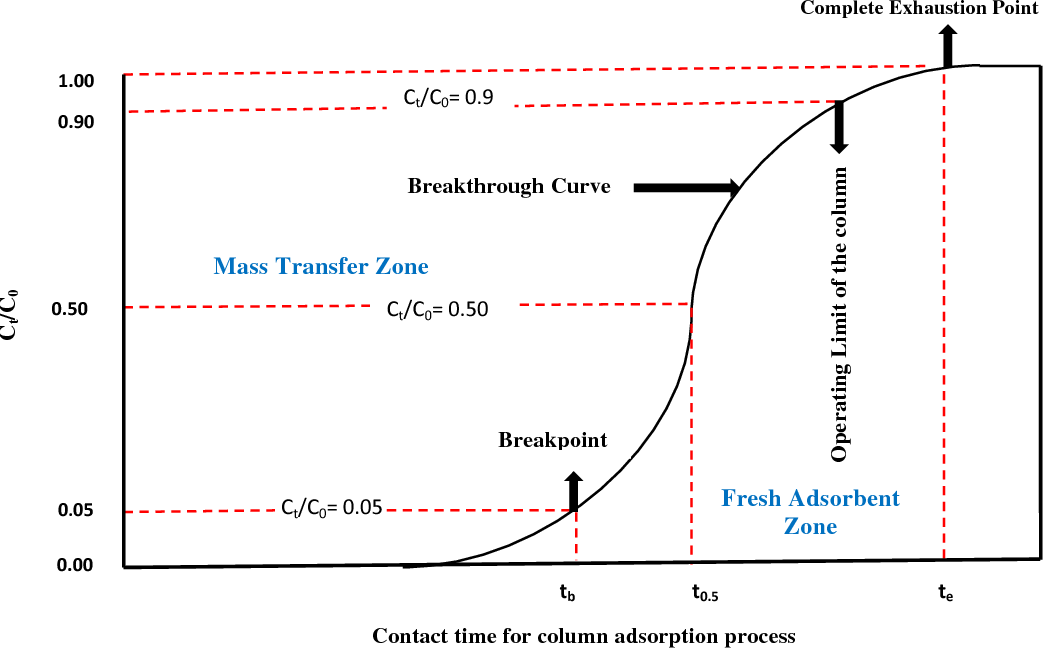
Breakthrough curves are fundamental performance indicators in fixed-bed adsorption systems. They represent how an adsorbate’s concentration in the column effluent changes over time, providing insight into adsorbent capacity, mass transfer behavior, and overall column efficiency.
In practical terms, breakthrough curves help engineers determine when an adsorbent bed becomes saturated and needs regeneration or replacement. These curves are extensively used in water purification, gas separation, air filtration, and environmental remediation processes.
Key Factors Affecting Breakthrough Curves
Below are the most influential parameters that shape breakthrough behavior in adsorption columns:
- Adsorbent Capacity: A higher adsorption capacity results in a delayed breakthrough and improved removal efficiency. Selection of an adsorbent with high equilibrium capacity and selectivity is crucial for optimizing system performance.
- Adsorption Kinetics: Fast adsorption kinetics yield sharper, more defined breakthrough curves. When mass transfer is slow, the breakthrough curve becomes broader, indicating inefficient utilization of the adsorbent bed.
- Flow Rate: Flow rate significantly impacts contact time. High flow rates lead to faster breakthrough and lower efficiency, while low flow rates extend contact time for higher uptake but slower throughput.
- Bed Height and Column Depth: Increasing bed height delays breakthrough and enhances total removal efficiency. However, excessively deep beds may cause pressure drop issues.
- Particle Size and Porosity: Smaller particles offer higher surface area and faster diffusion (sharper curves), but may increase pressure drop. Porosity is key for intraparticle diffusion.
- Axial Dispersion and Hydrodynamics: Axial dispersion causes solute spreading, resulting in broadened mass transfer zones. Proper column packing and distributor design minimize this.
- Temperature and Inlet Concentration: Higher temperatures usually decrease physical adsorption. Higher inlet concentrations lead to faster bed saturation and steeper curve fronts.
- Adsorption Isotherms: The isotherm type (e.g., Langmuir, Freundlich) defines the equilibrium and helps predict breakthrough curve shapes and capacity limits.
- Thermal Effects: Adsorption is often exothermic. Excessive heat can lower adsorption capacity and alter curve dynamics, making temperature management vital in large columns.
Breakthrough Curve Modeling and Scale-Up
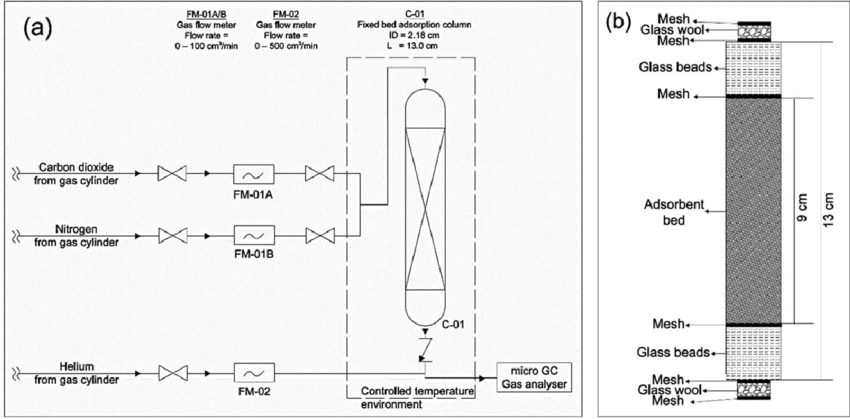
Modeling breakthrough behavior is essential for predicting full-scale column performance. Commonly used models include the Adams–Bohart Model (kinetics), Thomas Model (capacity), and Yoon–Nelson Model (practical prediction). Accurate parameter estimation and model validation ensure reliable scale-up from lab to industrial systems.
.png)
.png)
.png)
Engineering Insight: Optimization of breakthrough curves involves balancing adsorbent utilization, energy efficiency, and regeneration frequency—key to cost-effective adsorption design.
Conclusion
Understanding the factors influencing breakthrough curves enables process engineers to design efficient, scalable, and sustainable adsorption systems. By integrating insights from adsorption isotherms, kinetics, and hydrodynamics, industries can achieve higher separation efficiency and optimized column operation.